Peptide Softgels: Analytical Implementation Guide
Traditional lyophilized powders introduce a margin of error that modern longitudinal studies can no longer afford. Researchers often face significant…

Traditional lyophilized powders introduce a margin of error that modern longitudinal studies can no longer afford. Researchers often face significant…

The integrity of a metabolic study hinges on a single analytical variable: the precise sequence and purity of the peptide reagent. When sourcing…

What if six months of laboratory data were invalidated by a single discrepancy on a third-party Certificate of Analysis? Precision is the only…
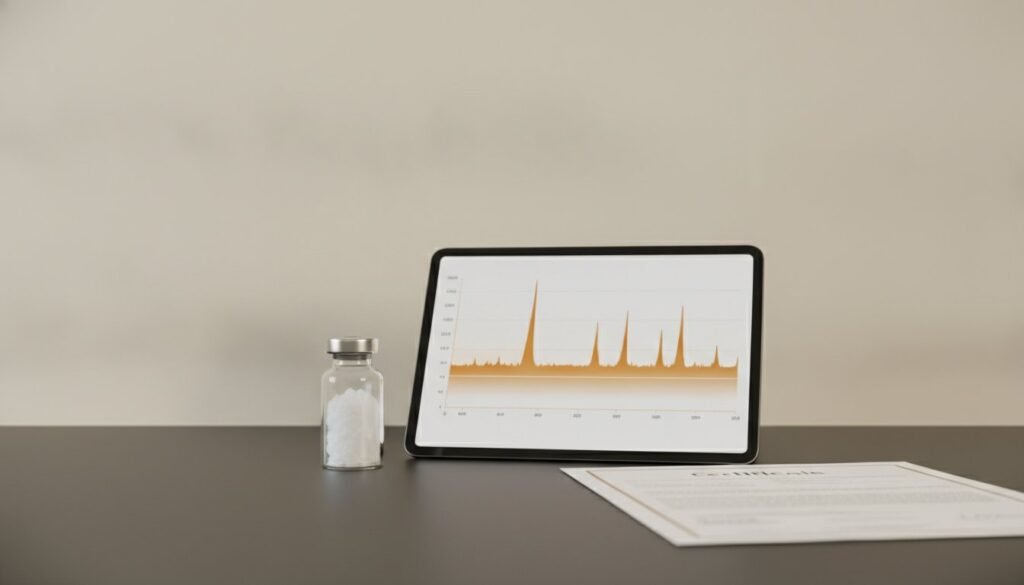
This guide provides technical protocols for verifying chemical integrity to ensure 99%+ purity. We’ll examine how to interpret HPLC and MS reports…

A 99% purity rating on a certificate of analysis is no guarantee of a clean experiment. While high-performance liquid chromatography effectively…

Precision in the laboratory depends on a single distinction: the difference between gross lyophilized weight and actual net peptide content. A 10mg…

Over 1,200 peptide-based candidates currently sit in clinical trials; however, the majority of laboratory failures stem from a single, preventable…
A high purity rating is not a guarantee of experimental success. It’s the baseline. Even with a verified sequence, the physical reality of peptide…
With the global bioanalytical testing services market projected to reach a valuation of $6.23 billion in 2026, the margin for reagent error has…

The industry standard for research-grade purity has shifted; 99% is the new minimum. Previous benchmarks of 95% or 98% no longer suffice for rigorous…