Defining GLP-1 Peptide Purity Standards for Analytical Research
A 99% purity rating on a certificate of analysis is often a mask for analytical insufficiency. In metabolic research, one unidentified peak on a…

A 99% purity rating on a certificate of analysis is often a mask for analytical insufficiency. In metabolic research, one unidentified peak on a…

Can your laboratory’s current procurement chain withstand the scrutiny of a rigorous third-party audit? In high-stakes molecular research, an…
A 2026 comparative study revealed that GHK-Cu improved collagen production in 70% of participants, outperforming both vitamin C and retinoic acid….
An unverified positive control isn’t a benchmark; it’s a liability. When setting up a positive control for peptide experiments, the integrity of your…

A single day of reagent delay can invalidate months of longitudinal data. In the high-stakes environment of 2026 research, finding a reliable…

With over 1,200 peptides currently in clinical trials as of June 2026, the margin for experimental error is effectively zero. A single impurity can…
A certificate of analysis is not a guarantee of molecular stability when ambient temperatures in a Las Vegas delivery vehicle exceed 110 degrees…
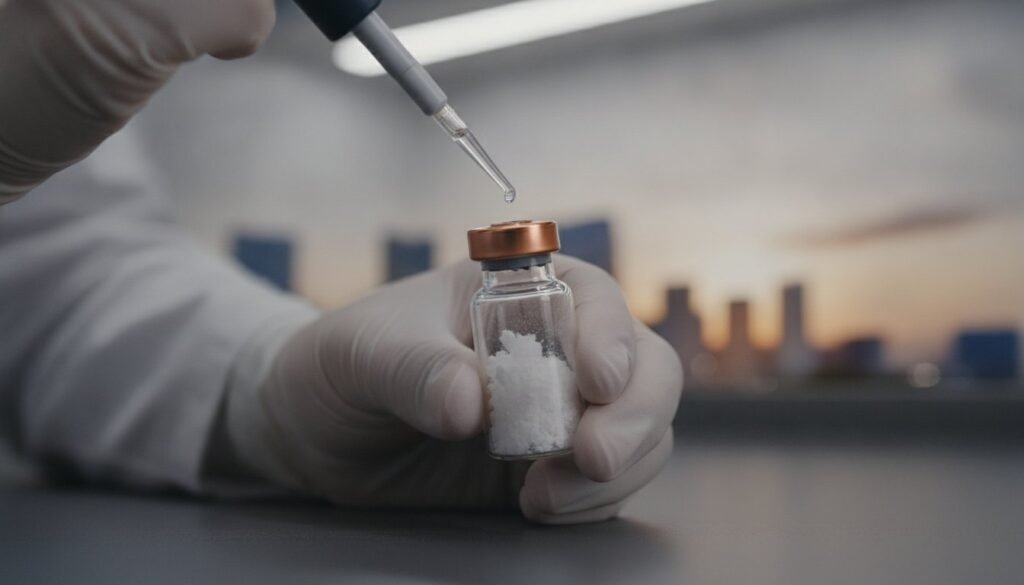
A single error in solvent calculation or mechanical agitation can render an entire lyophilized sequence biologically inert. You recognize that the…