Impact of Trifluoroacetic Acid (TFA) on Cell Assays: A Researcher’s Guide
Could a standard laboratory reagent be the primary driver of your inconsistent experimental data? Trifluoroacetic acid is 100,000 times more acidic…

Could a standard laboratory reagent be the primary driver of your inconsistent experimental data? Trifluoroacetic acid is 100,000 times more acidic…
A single microbial colony can dismantle months of rigorous research in hours. You know that even the most sophisticated assay is worthless if the…
A single compromised sequence can invalidate months of laboratory work. When experimental reproducibility fails, the culprit is often hidden at the…
Precision in accelerated aging studies for peptides is a function of starting purity. Without high-tier, US-manufactured reagents, your stability…
The most dangerous moment for a research reagent isn’t during transit; it’s during the transition from solid to liquid state within your own…
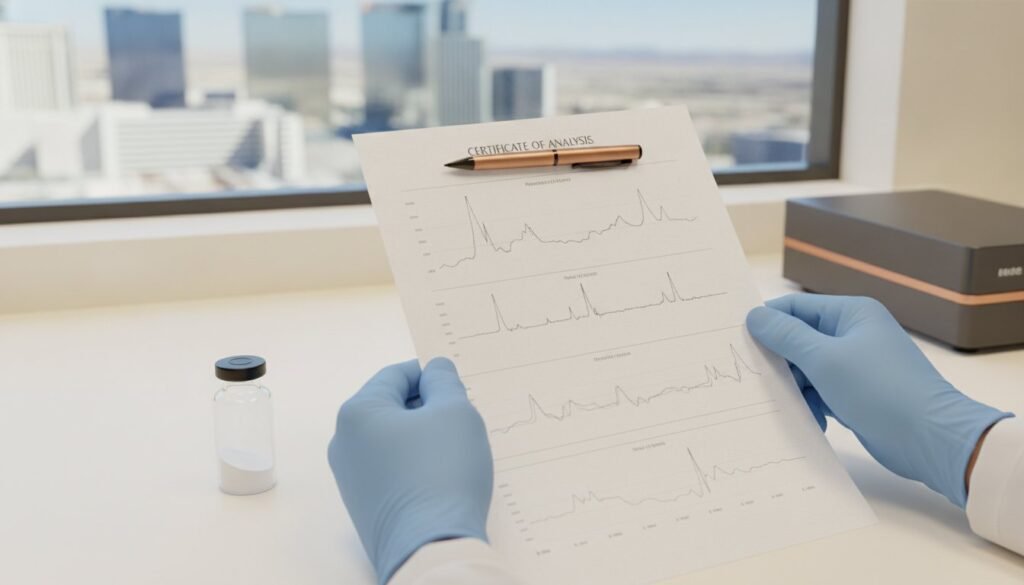
A 99% purity claim is a marketing statistic, not a scientific guarantee. In a landscape where the FDA is reclassifying peptides over 40 amino acids…

A 98% purity rating on a Certificate of Analysis doesn’t mean your vial contains 98% peptide. In fact, the net peptide content for trifluoroacetic…
Independent analysis identifies mislabeling, improper dosing, or contamination in approximately 30% of gray-market peptide samples. These failures…
A 5 mg lyophilized vial rarely contains 5 mg of active peptide. Relying on gross weight for reconstitution is a fundamental error that compromises…
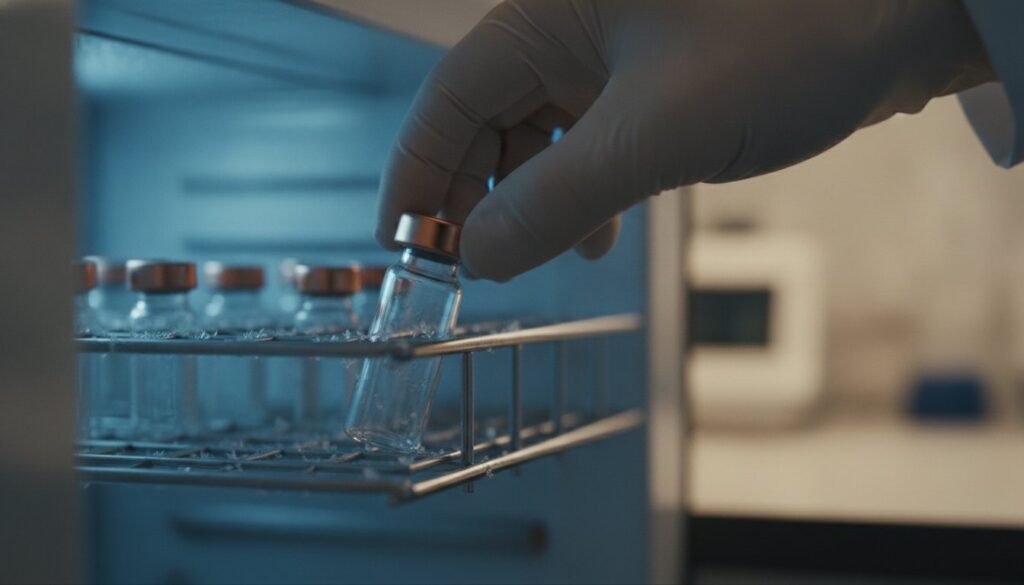
A single freeze-thaw cycle can reduce a reconstituted peptide’s potency by as much as 50 percent. This degradation occurs at the molecular level,…