
A single compromised aliquot can invalidate months of data. It wastes thousands of dollars in high-purity reagents. Most researchers understand that inconsistent results often stem from subtle procedural variations rather than the raw materials themselves. Creating a peptide research SOP for your lab is the only way to safeguard experimental integrity. It’s a necessary transition from ad hoc methods to a standardized analytical safeguard. This ensures every researcher follows the same high-purity framework.
This article details the technical requirements for cold chain management and COA verification through secure portals. We’ll examine standardized reconstitution methods that align with current 2026 standards for chemical stability. This guide provides the protocols needed to maintain strict Research Use Only (RUO) compliance. You’ll learn to maximize the shelf-life of your chemical assets. By the end, you’ll have a reproducible roadmap for analytical accuracy in a shifting regulatory landscape.
Key Takeaways
- Formalize batch verification by integrating mandatory third-party COA validation into your receipt workflow to ensure reagent purity.
- Optimize reagent stability through sequence-specific solvent selection and defined temperature-controlled storage zones for lyophilized materials.
- Ensure institutional accountability by standardizing PPE requirements and hazardous waste disposal protocols in line with current EPA standards.
- Establish a rigorous framework for creating a peptide research SOP for your lab to ensure experimental reproducibility and analytical precision.
Standardizing Receipt and Analytical Verification Protocols
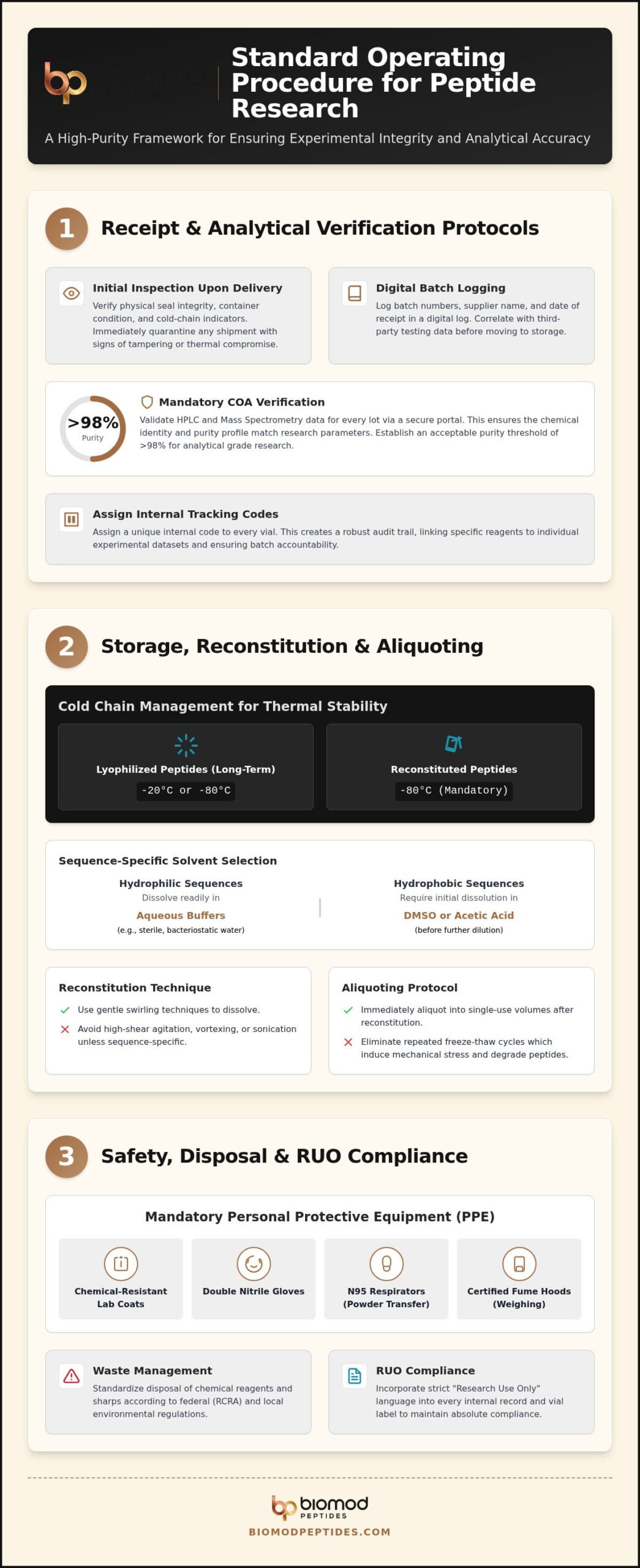
Structural integrity in the laboratory begins at the receiving dock. A formal Standard Operating Procedure (SOP) ensures every reagent entering the facility meets pre-defined quality benchmarks. This starts with a mandatory inspection checklist. Personnel must verify physical seal integrity, container condition, and cold-chain indicators immediately upon delivery. Any sign of tampering or thermal compromise requires immediate quarantine. Standardizing these initial checks prevents the introduction of degraded materials into the research environment.
Documentation is the core of accountability. Researchers must log batch numbers and correlate them with third-party testing data. Creating a peptide research SOP for your lab requires a procedural mandate for cross-referencing manufacturer claims against independent purity reports. This verification eliminates the risk of using sub-standard reagents that could skew analytical accuracy. Use a digital log to record the date of receipt, supplier name, and batch-specific identifiers before the material moves to long-term storage.
Implementing COA Verification and Batch Accountability
Validation must be objective and transparent. Use the COA verification portal to validate HPLC and Mass Spectrometry data for every lot. This step isn’t optional. It ensures the chemical identity and purity profile match the intended research parameters. For analytical grade research, establish an acceptable purity threshold at >98%. Lower thresholds may be acceptable for pilot studies, but these must be explicitly defined in the SOP to prevent ambiguity.
Assign internal tracking codes to every vial upon verification. These codes link specific reagents to individual experimental datasets, creating a robust audit trail. If a batch exhibits unexpected behavior during synthesis or analysis, every affected study remains identifiable. This level of granularity’s essential for maintaining the high-purity framework required for reproducible science.
Procedures for Storage, Reconstitution, and Aliquoting
Thermal stability dictates reagent longevity. Lyophilized peptides must remain at -20°C or -80°C for long-term archiving. Once reconstituted, storage at -80°C is mandatory to prevent hydrolysis and oxidation. Creating a peptide research SOP for your lab requires establishing these distinct temperature zones. It’s a fundamental step in ensuring analytical accuracy. US-manufactured reagents often exhibit superior stability profiles due to controlled finishing processes, but improper storage can still lead to rapid degradation.
Solvent selection must align with the peptide’s hydrophobicity profile. Hydrophilic sequences dissolve readily in aqueous buffers. Hydrophobic variants often require initial dissolution in DMSO or acetic acid before dilution. Establishing these protocols is the second phase of creating a peptide research SOP for your lab. Standardize the aliquoting process to eliminate repeated freeze-thaw cycles. These cycles induce mechanical stress that compromises structural integrity. Aliquot immediately into single-use volumes to maintain batch-to-batch consistency.
Cold Chain Management and Solvent Selection Standards
Mandate the use of sterile, bacteriostatic water or specific buffers as dictated by peptide science. Procedural rigor extends to the reconstitution method. Researchers must use gentle swirling techniques. Avoid high-shear agitation, vortexing, or sonication unless the sequence specifically requires it. This protects delicate amide bonds from degradation. For specialized formats, such as peptide softgels for research, maintain the integrity of the delivery system by avoiding extreme temperature fluctuations. These fluctuations compromise the lipid shell and internal stability. For labs requiring high-tier reagents, sourcing from a reliable research provider ensures the starting material meets these rigorous stability benchmarks.
Safety, Disposal, and RUO Compliance Frameworks
Handling concentrated peptide powders requires stringent barrier protection. Creating a peptide research SOP for your lab necessitates defining specific PPE requirements. This includes chemical-resistant lab coats, double nitrile gloves, and N95 respirators to mitigate inhalation risks during powder transfer. Precision in safety prevents cross-contamination and researcher exposure. All weighing activities must occur within certified fume hoods. It’s the only way to ensure atmospheric integrity within the facility.
Waste management must follow Resource Conservation and Recovery Act (RCRA) guidelines. Standardize the disposal of chemical reagents and sharps according to federal and Las Vegas local environmental regulations. Documentation must remain absolute. Incorporate strict Research Use Only (RUO) language into every internal record and vial label. This ensures regulatory alignment and protects the facility from compliance risks. Prohibit the disposal of any chemical waste through standard sewer systems.
Managing Research-Only Terms and Laboratory Safety
The SOP must explicitly prohibit any non-laboratory application of reagents. This is a non-negotiable standard for maintaining institutional integrity. Document this prohibition in the introductory section of every protocol. Include a clear ‘Accidental Exposure’ protocol. This details immediate decontamination steps, such as 15-minute eye irrigation and SDS review. Review and update the document annually. This ensures the workflow reflects advancements in peptide purity verification and emerging safety technologies. Maintaining a current SOP is the final step in securing the analytical lifecycle.
Advancing Analytical Accuracy Through Standardized Frameworks
Establishing a rigorous laboratory protocol is the final step in ensuring experimental reproducibility. Formalizing receipt inspections and mandates for third-party COA validation eliminates the variables that compromise research integrity. Creating a peptide research SOP for your lab transforms reagent handling from a logistical task into an analytical safeguard. This framework protects high-purity assets through precise thermal management and solvent selection. It further ensures institutional safety by aligning with federal disposal standards and RUO compliance mandates.
Consistency in results begins with the quality of the starting material. Biomod Peptides provides US-manufactured and finished reagents. Every research batch undergoes independent third-party testing. Our dedicated COA verification portal offers the analytical accountability required for modern laboratory standards. Secure high-purity reagents for your laboratory protocols at Biomod Peptides. Implementing these rigorous standards today builds a foundation for the breakthroughs of tomorrow.
Frequently Asked Questions
How often should a laboratory’s peptide research SOP be audited and updated?
Laboratories must conduct a formal audit of their SOP at least once per year. This ensures alignment with evolving 2026 analytical standards and safety technologies. Updates are also necessary whenever you integrate new reagents, such as specialized peptide softgels or sprays. Regular reviews prevent procedural drift and maintain the structural integrity of your experimental data over time.
Why is third-party COA verification a mandatory step in a professional SOP?
Third-party COA verification provides an objective baseline for reagent purity and chemical identity. It eliminates reliance on manufacturer-only data, which is a critical safeguard for analytical accuracy. Professional labs use verification portals to validate HPLC and Mass Spectrometry results for every batch. This step ensures that only reagents meeting the >98% purity threshold enter the active research workflow.
What storage protocols prevent the degradation of lyophilized peptides in a lab setting?
Lyophilized peptides require storage at -20°C or -80°C to maintain long-term stability. You must ensure containers are tightly sealed and protected from light and moisture. Creating a peptide research SOP for your lab should mandate a dedicated, temperature-monitored freezer zone for these materials. US-manufactured reagents benefit from these controlled environments, as they prevent the peptide hydrolysis that occurs at higher temperatures.
Disclaimer
BIOMOD products are sold strictly for laboratory, analytical, and scientific research use only. They are not intended for human or animal consumption, administration, application, ingestion, injection, or any therapeutic, diagnostic, or cosmetic use.
The statements made on this website have not been evaluated by the United States Food and Drug Administration. BIOMOD products are not intended to diagnose, treat, cure, mitigate, or prevent any disease or medical condition.
BIOMOD is a research chemical supplier. BIOMOD is not a compounding pharmacy or chemical compounding facility as defined under Section 503A of the Federal Food, Drug, and Cosmetic Act. BIOMOD is not an outsourcing facility as defined under Section 503B of the Federal Food, Drug, and Cosmetic Act.
By accessing this site, you confirm you are at least 21 years of age and that you have read and accepted the BIOMOD Terms of Sale, Privacy Policy, and Research Use Only Policy. BIOMOD does not provide dosing, medical, therapeutic, diagnostic, veterinary, or use guidance under any channel.