Optimizing Signal-to-Noise in Peptide Experiments: A Researcher’s Protocol
The most advanced mass spectrometry software, including the latest MSFragger 4.4.1, cannot salvage data compromised by baseline contamination….

The most advanced mass spectrometry software, including the latest MSFragger 4.4.1, cannot salvage data compromised by baseline contamination….
Traditional lyophilized powders introduce a margin of error that modern longitudinal studies can no longer afford. Researchers often face significant…

Research suggests that reproducibility rates in pre-clinical sciences can fall as low as 10% to 25%. You’ve likely faced the frustration of…
How many months of laboratory labor are currently being sacrificed to the hidden inconsistency of a single reagent lot? You recognize that a minor…

What if the variance stalling your publication isn’t a flaw in your pipetting technique, but an invisible failure in reagent integrity? High…
The global peptide therapeutics market is projected to reach $163.98 billion in 2026. This massive scale underscores the critical role of peptides in…

NIH R01 success rates for early-career researchers have fallen to 18.5% in 2026. This reality demands a shift from broad exploration to clinical…
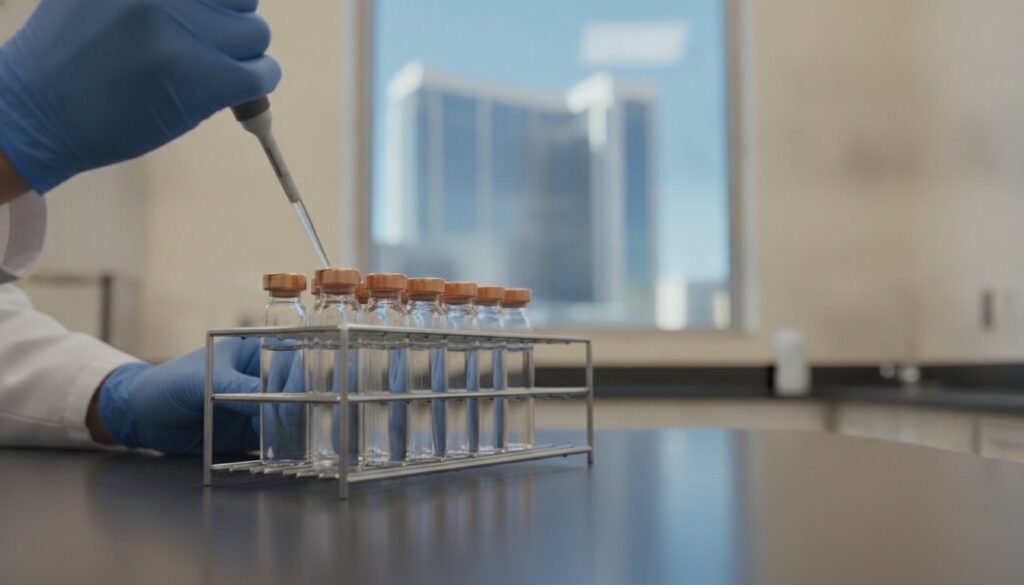
A single hour of exposure to suboptimal temperatures can reduce the secondary structure integrity of a synthetic peptide by up to 12%. This rapid…

Purity in analytical research isn’t a subjective claim. It’s a quantifiable metric. For laboratories operating at the edge of discovery, even a 2%…