
The assumption that all melanocortin-derived peptides carry systemic hormonal baggage is a significant barrier to precise intestinal research. KPV is different. It’s a non-hormonal tripeptide. It targets inflammatory cascades without the side effects of its parent molecule, alpha-MSH. For researchers investigating KPV Peptide for Gut Health, the priority is how this C16H30N4O4 structure utilizes PepT1 transporters to enter cells and modulate intracellular signaling. Preclinical data suggests a 50% reduction in colonic myeloperoxidase activity in specific models. However, the lack of human clinical data necessitates rigorous, high-purity experimental design.
You understand that experimental success depends on reagent purity and precise delivery formats. Ambiguity regarding the non-hormonal nature of KPV or the lack of US-based analytical verification shouldn’t stall your progress. This guide provides a technical examination of the Lys-Pro-Val tripeptide’s role in modulating inflammatory signaling within experimental intestinal models. We’ll analyze NF-κB signaling interference. This includes a review of the July 2026 FDA regulatory updates and protocols for procuring high-purity softgels or sprays for Las Vegas-based laboratories. We’ll also examine the analytical standards required for research-grade reagents, including HPLC/Mass Spec verification and endotoxin testing.
Key Takeaways
- Identify why the Lys-Pro-Val sequence functions as a non-hormonal tripeptide. This distinction is vital for isolating anti-inflammatory effects from systemic melanotropic activity.
- Analyze the interaction between KPV Peptide for Gut Health and PepT1 transporters. This pathway is the primary driver for modulating intracellular inflammatory signaling in gut models.
- Learn the analytical requirements for high-purity procurement. Standardize your lab protocols using HPLC and Mass Spectrometry to verify sequence accuracy and the absence of TFA residues.
- Evaluate the utility of specialized delivery formats. Research-grade softgels and sprays provide stable delivery systems for complex experimental protocols.
Molecular Profile of KPV (Lys-Pro-Val) in Intestinal Research
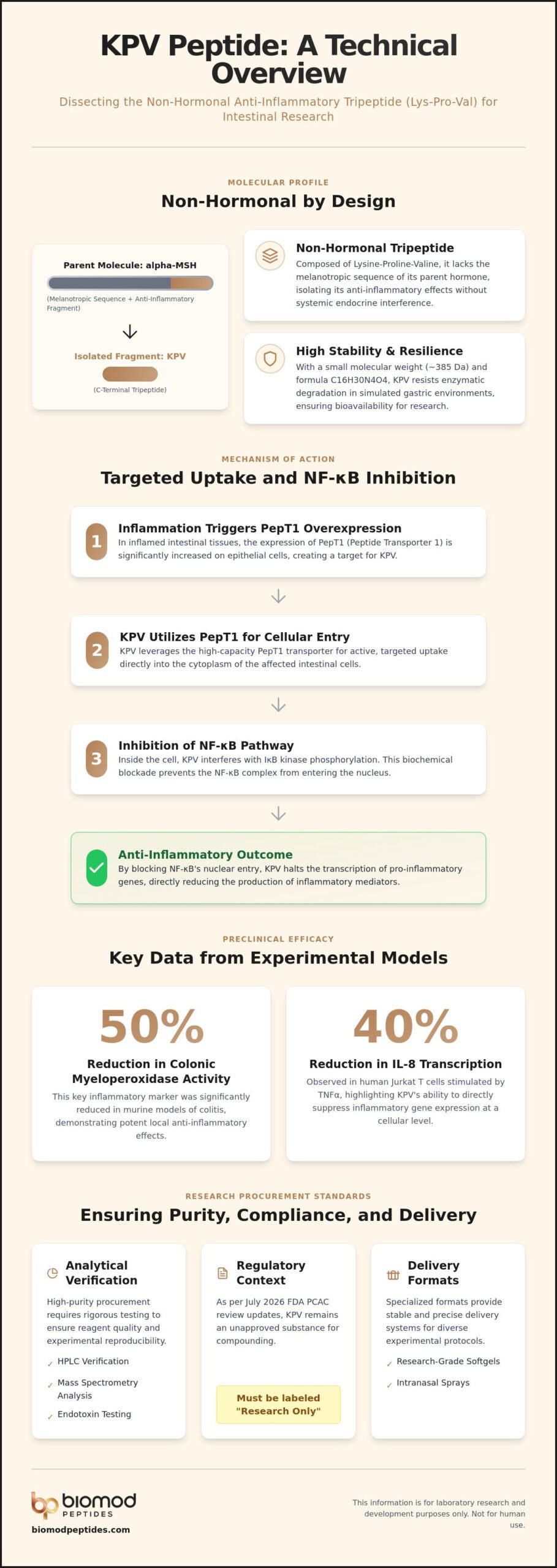
KPV is a tripeptide consisting of Lysine-Proline-Valine. It represents the specific C-terminal fragment of alpha-melanocyte-stimulating hormone (alpha-MSH). Unlike its parent hormone, the KPV tripeptide lacks the melanotropic sequence. This structural omission is critical. It makes the molecule a non-hormonal candidate for anti-inflammatory research. By removing the sequence responsible for pigment modulation, researchers can isolate the peptide’s effects on immune signaling without endocrine interference.
The primary research utility of KPV is its role as a modulator of NF-κB signaling in intestinal epithelial cells. With a molecular weight of approximately 385 Da, the molecule is exceptionally stable. This small size allows for diverse delivery research, including intranasal and oral models. Researchers investigating KPV Peptide for Gut Health often utilize specialized formats like peptide spray products to assess mucosal absorption and systemic distribution in experimental settings.
Structure-Activity Relationship in Gut Health Models
The Lys-Pro-Val sequence is engineered for resilience. It resists enzymatic degradation in the digestive tract more effectively than larger, more complex peptide chains. In simulated gastric environments, KPV maintains structural integrity where other proteins fragment. This stability ensures that the tripeptide remains bioavailable for interaction with PepT1 transporters. Such durability is a prerequisite for accurate longitudinal studies involving KPV Peptide for Gut Health in murine or in-vitro intestinal inflammation models.
2026 Regulatory Context for Research Reagents
Compliance is mandatory for Las Vegas laboratory operations. As of July 2026, the FDA Pharmacy Compounding Advisory Committee (PCAC) continues to review KPV-related bulk drug substances. While the FDA removed KPV from the Category 2 list in April 2026, it remains an unapproved substance. It must be strictly designated with “Research Only” labeling. Professional procurement requires third-party HPLC verification to ensure reagents meet the rigorous standards of modern laboratory environments and maintain experimental reproducibility.
Mechanism of Action in Experimental Intestinal Inflammation
The efficacy of KPV Peptide for Gut Health is primarily attributed to its interaction with PepT1 (Peptide Transporter 1). This transporter is specifically expressed in intestinal epithelial cells. Under normal physiological conditions, PepT1 expression is limited. However, in inflamed intestinal tissues, this transporter is significantly overexpressed. KPV utilizes this pathway for active intracellular uptake. This targeted entry allows the tripeptide to exert its effects directly within the cytoplasm of the affected cells.
Technical discussions regarding KPV Procurement and Laboratory Use highlight how delivery systems impact these cellular pathways. Once internalized, KPV modulates the intestinal barrier function by stabilizing tight junction proteins. In DSS-induced colitis models, this stabilization helps maintain structural integrity. Beyond inflammatory modulation, research indicates KPV may possess antimicrobial properties. It appears to interfere with pathogen adhesion to the gut wall, potentially reducing the localized impact of harmful bacteria during experimental trials. Researchers seeking high-purity reagents for these models often consult Biomod Peptides for verified research materials.
Targeting the NF-κB Signaling Pathway
KPV functions as a potent inhibitor of the NF-κB translocation process. It specifically interferes with the phosphorylation of IκB kinase. This interference prevents NF-κB from entering the nucleus and initiating the transcription of pro-inflammatory genes. Experimental data is conclusive. In human Jurkat T cells stimulated by TNFα, 10 nM of KPV reduced IL-8 transcription by approximately 40%. This precise biochemical blockade directly lowers the production of inflammatory mediators in research subjects.
PepT1 Transporter Mediated Uptake
The reliance on PepT1 is a cornerstone of current KPV Peptide for Gut Health research. Because PepT1 is a high-capacity, low-affinity transporter, it facilitates the rapid influx of the tripeptide into inflamed cells. Evidence from murine models of colitis shows that this uptake leads to a 50% reduction in colonic myeloperoxidase activity. This metric serves as a primary indicator of reduced neutrophil infiltration. Such intracellular activity confirms that KPV’s role extends beyond surface-level interaction, providing a deep-tissue regulatory effect in experimental models.
Analytical Standards for KPV Procurement and Laboratory Use
Reliable outcomes in KPV Peptide for Gut Health studies depend entirely on reagent integrity. High-Performance Liquid Chromatography (HPLC) and Mass Spectrometry are mandatory. These analytical methods ensure purity levels exceed 99%. Third-party validation is the only way to confirm the peptide sequence and the total absence of Trifluoroacetic acid (TFA) residues. TFA is a common byproduct of peptide synthesis. It’s also a known cytotoxic agent that can skew experimental data in sensitive intestinal models. Citing KPV’s Mechanism in Reducing Intestinal Inflammation clarifies why molecular precision is non-negotiable for observing intracellular NF-κB modulation.
Selecting the correct delivery format is equally critical for experimental design. Scientists often utilize peptide softgels for research to achieve consistent oral dosing. This format protects the tripeptide from premature degradation. Conversely, intranasal peptide research sprays allow researchers to bypass first-pass metabolism. This is particularly useful in systemic inflammation models where mucosal absorption speed is a primary variable.
Verifying Reagent Quality in Las Vegas Labs
Precision procurement requires transparency. Researchers should utilize the Biomod COA verification portal to access batch-specific analytical reports. This step-by-step verification ensures that every vial matches its stated molecular profile. Identifying red flags is part of the process. Inconsistent batch colors or high impurity profiles suggest substandard manufacturing. For a deeper dive into these requirements, consult The Protocol for Peptide Purity Verification. It’s a standard for Las Vegas facilities requiring laboratory-grade reagents.
Storage and Stability Protocols for Researchers
Thermal stability dictates the shelf life of KPV Peptide for Gut Health reagents. Lyophilized powder is stable at -20°C for long-term storage. Once reconstituted into a liquid state, the peptide should be kept at 4°C. Avoid multiple freeze-thaw cycles. These cycles cause physical stress on the peptide bonds. Implementing standardized handling protocols prevents degradation. It ensures that the tripeptide remains active for the duration of the laboratory experimentation.
Advancing Intestinal Research with Analytical Precision
Experimental success in gut models requires more than just a chemical compound. It demands a rigorous understanding of the tripeptide’s molecular behavior. As established, the non-hormonal nature of KPV allows for isolated study of inflammatory cascades without endocrine interference. By targeting PepT1 transporters and inhibiting NF-κB translocation, KPV Peptide for Gut Health offers a specific pathway for modulating cytokine expression in research environments. Maintaining this specificity requires reagents that meet the highest analytical benchmarks. Substandard purity or the presence of TFA residues can compromise the integrity of your longitudinal data.
Reliability is the foundation of scientific advancement. Utilizing US-manufactured reagents with third-party HPLC and Mass Spec verification ensures that your laboratory protocols remain reproducible. Biomod Peptides provides these standards through a dedicated COA verification portal, offering complete transparency for every batch. Secure the precise materials your study requires to move from hypothesis to validated conclusion. Procure High-Purity KPV for Research at Biomod Peptides today. Your commitment to meticulous methodology deserves a reagent provider that matches your standards for precision and accountability.
Frequently Asked Questions
Is KPV peptide stable for oral research delivery?
KPV is exceptionally stable for oral research delivery due to its tripeptide structure. The Lys-Pro-Val sequence resists enzymatic degradation in the gastrointestinal tract more effectively than larger protein chains. Its small molecular weight allows it to remain intact in simulated gastric environments. This stability makes it an ideal candidate for studies using research-grade softgels to ensure consistent intracellular uptake via PepT1 transporters.
How does KPV differ from BPC-157 in gut health research?
KPV and BPC-157 operate through distinct biochemical pathways. KPV is a non-hormonal fragment of alpha-MSH that specifically modulates NF-κB signaling and pro-inflammatory cytokines. BPC-157 is a pentadecapeptide that primarily influences angiogenesis and growth factor expression. While both are used in intestinal models, KPV is preferred for research focused on direct immune signaling interference and transporter-mediated cellular entry.
What is the recommended purity level for KPV in analytical chemistry?
Analytical chemistry standards require a purity level of >99% for experimental reproducibility. This threshold must be verified through independent HPLC and Mass Spectrometry testing. Procuring KPV Peptide for Gut Health at this level ensures the absence of TFA residues and endotoxins. High purity is mandatory to prevent cytotoxic interference and to maintain the integrity of inflammatory marker measurements in sensitive laboratory models.
Can KPV be used in intranasal research for systemic inflammation?
KPV is highly effective in intranasal research models because its small molecular size facilitates rapid mucosal absorption. This route bypasses first-pass metabolism, allowing the tripeptide to enter systemic circulation efficiently. It’s often utilized in studies investigating systemic inflammatory responses where oral degradation or injection is not preferred. This format is particularly useful for assessing the peptide’s ability to modulate immune signaling across different physiological barriers.
Disclaimer
BIOMOD products are sold strictly for laboratory, analytical, and scientific research use only. They are not intended for human or animal consumption, administration, application, ingestion, injection, or any therapeutic, diagnostic, or cosmetic use.
The statements made on this website have not been evaluated by the United States Food and Drug Administration. BIOMOD products are not intended to diagnose, treat, cure, mitigate, or prevent any disease or medical condition.
BIOMOD is a research chemical supplier. BIOMOD is not a compounding pharmacy or chemical compounding facility as defined under Section 503A of the Federal Food, Drug, and Cosmetic Act. BIOMOD is not an outsourcing facility as defined under Section 503B of the Federal Food, Drug, and Cosmetic Act.
By accessing this site, you confirm you are at least 21 years of age and that you have read and accepted the BIOMOD Terms of Sale, Privacy Policy, and Research Use Only Policy. BIOMOD does not provide dosing, medical, therapeutic, diagnostic, veterinary, or use guidance under any channel.